A Call to Courageous Love: On Loving Our Immigrant Neighbors
by Jin H. Cho, co-host of The Micah Podcast from Brehm Preaching
—
History reminds us that the faithfulness of the church and its mission is deeply connected to our willingness to live fully within the reality of our times. Especially in times of darkness, when the powerful abuse the powerless, Christians have felt the call of our baptismal vows “to resistevil in all its forms” by standing with and for the oppressed and the marginalized. This is such a time. In this moment of governmental overreach and racialized injustice toward immigrants, the church must publicly embody Christ’s courageous love through truth-telling, peacemaking, and resistance to all forms of dehumanization.
Recent operations by ICE in our cities have highlighted the cruel and even unconstitutional ways in which our federal government has brutalized our immigrant neighbors and endangered people of color. When these actions are justified at the highest levels of government through distorted andracially charged claims about immigrants, we are living in a moment in which the church cannot remain silent. This is our moment to embody Christ’s courageous love in faithful resistance in support of our neighbors.
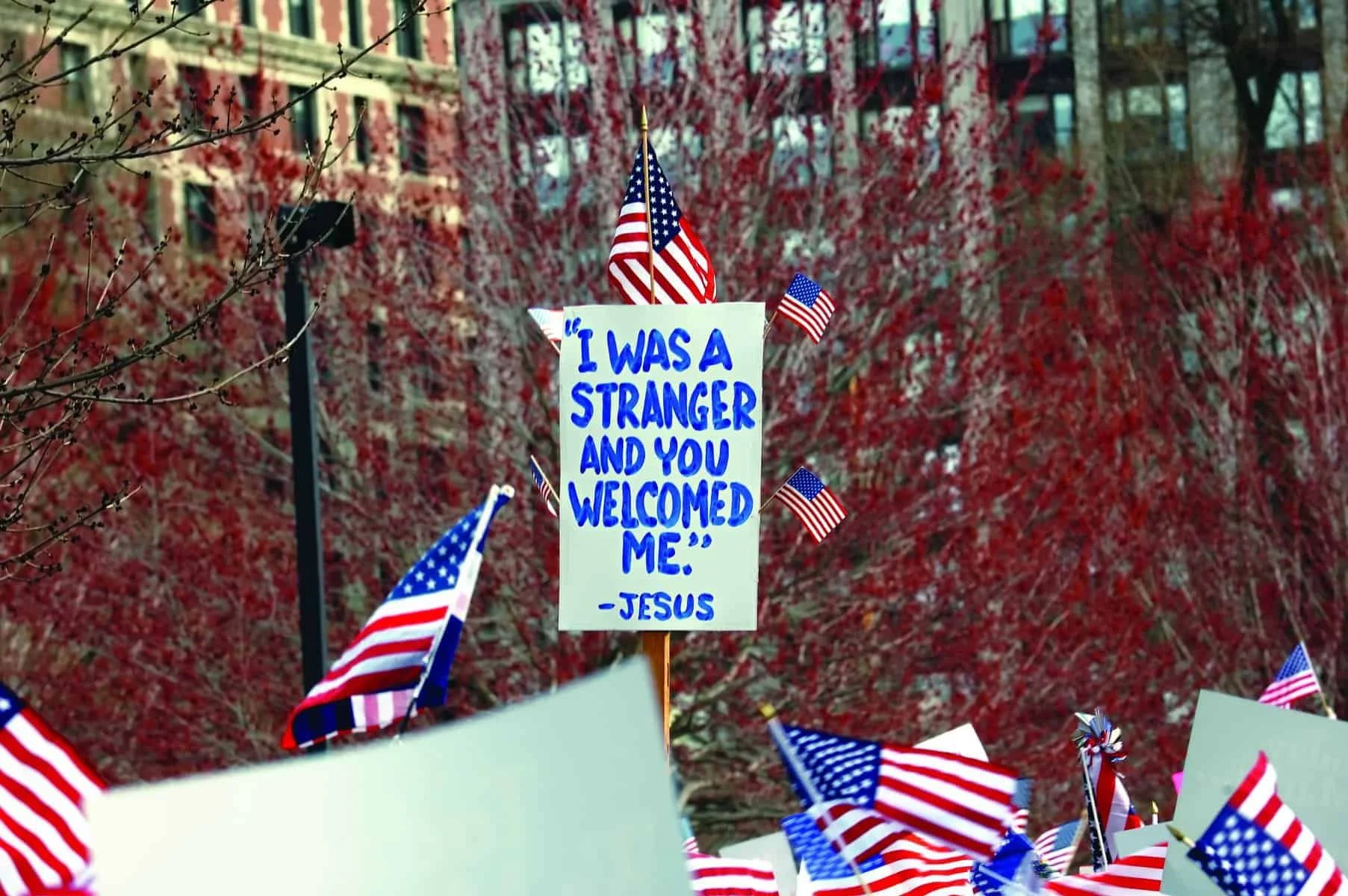
First, we are called to love. Loving our neighbor, whatever their background, is not a partisan act but a foundational posture of discipleship (Luke 10:25–37). We care for others because God commands us to do so. No adherence to human law or governmental powers can supersede the clear teachings of Scripture to welcome the foreigner, feed the hungry, and love our neighbor, for this is the heart of God.
Second, we are called to truth-telling.Truth-telling is a core discipleship virtue (Exodus 20:16; Ephesians 4:25; 1 John 3:18). In the present moment, standing up for truth includes calling out our authorities when they “bear false witness” against our neighbors (e.g., claims that Haitians eat dogs and cats), resisting slander that portrays immigrants as criminals who steal jobs and resources, and challenging propaganda that fuels fear-based policies (e.g., that ICE only pursues violent criminals). Silence in the face of such falsehoods is a failure to live as people of truth, complicit to the perpetuation of evil.
Third, we are called to active peacemaking.Rather than mere conformity or conflict-avoidance, biblical peacemaking actively seeks to do justice in the presence of injustice, as we work to live into God’s kingdom vision of a just and merciful world. (Matt 5:9; Micah 6:8; Psalm 85:10) Such peacemaking resists violence, but in sacrificial love willingly stands up to those who would abuse others. We must speak for those who cannot, give comfort to the fearful, advocate for those in need of mercy. Fourth, we are called to see the image of God in immigrants.
We must repent of our dehumanizing attitude and treatment of our immigrant brothers and sisters. Christians may disagree about immigration policy, but we cannot disagree about the dignity of persons or the prohibition against cruelty. Immigrants are fellow human beings who bear the image of God. “Do not mistreat the foreigner, as you were foreigners once” we are told (Exodus 22:21). We must demand just and humane treatment of all, in every stage of the immigration process. Fifth, we are called to keep our allegiance to Christ above all.
We must denounce Christian Nationalism as an abhorrent heresy that binds Jesus to political power, distorting and displacing the Lordship of Christ. Romans 13 does not mandate an unconditional submission to earthly authorities. Christian history is full of saints who “broke the law of the land”—those who fought against Jim Crow laws; denounced the mistreatment of the poor in El Salvador; hid refugees from the Nazis; and were conductors on the Underground railroad, among countless others. We follow in their holy footsteps.
Lastly, to my sisters and brothers who have been called to shepherd churches and lead ministries, I ask us to remember that there are those under our care who are living in fear in these times–for themselves, for their loved ones, for their neighbors. Even citizens of color and immigrants with legal status live under the threat of unwanted government attention. This should not be. May our loving care for these not be lost upon us at this moment.